Denver real estate is doing something that feels wildly inconsistent on the surface.
One house sells in a day with multiple offers. Another sits for weeks. Inventory feels high. Demand feels softer. Prices should be dropping, right?
Except they are not really dropping.
That is the strange part.
If you are trying to make sense of the Denver housing market in 2026, you cannot rely on a single headline, one national app, or a metro-wide average and call it good. This market has become much more layered than that. You have to understand the numbers, the timing, and the neighborhood level reality.
I was recently talking with someone who moved here years ago, felt total sticker shock, decided to rent first, and then watched a huge amount of equity growth pass him by. That story is exactly why this matters. You do not want to jump in blindly, but you also do not want confusion to keep you frozen while the market shifts under your feet.
There are four big reasons Denver feels so weird right now, and once you see them together, the market starts making a lot more sense.
Table of Contents
- Denver Housing Market 2026: What's Happening?
- Reason #1: Why Denver Home Prices Are Staying Flat
- Reason #2: Why Denver Housing Inventory Is Rising
- Reason #3: Why Some Denver Homes Sell Faster
- Reason #4: Smart Negotiation Strategies for Denver Buyers
- FAQs About Denver Housing Market 2026
- Final Thoughts on the Denver Housing Market
Denver Housing Market 2026: What's Happening?
Before getting into the four reasons, there is one important thing to understand about market data in general. A lot of the information people quote is already behind the market by the time it becomes public conversation.
A home goes under contract in one month, closes the next month, and the compiled reporting comes after that. So if you are reading broad market coverage, it may reflect decisions that were made 30 to 60 days earlier. In a market as choppy as this one, that lag matters.
It also matters what you are measuring. A downtown condo and a luxury home in Highlands Ranch are not behaving the same way. Attached and detached homes are not behaving the same way. Central neighborhoods and outer ring suburbs are not behaving the same way.
That is why Denver feels confusing right now. The metro average tells one story, but the pocket you actually want to buy in may be telling another.
Now let’s get into the four reasons this market feels so strange.
Reason #1: Why Denver Home Prices Are Staying Flat
The first reason is prices are surprisingly flat.
That sounds boring until you remember what Denver has been through over the last few years. Flat is not what people expect here. For a long time, the expectation has been that spring means prices rise fast and aggressively. But that is not what the numbers are showing.
In April 2026, the average price was about $721,000. That sounds sky high, and it is. But here is the twist. It is also very close to the spring peaks we have seen for the last several years.
- 2022 peak was about $738,000
- 2023 peak was about $723,000
- 2024 peak was about $724,000
- 2026 is sitting around $721,000
In other words, Denver has not been climbing in a straight line lately. It has been moving sideways near the top.
Year-to-date, the average closed price is around $700,000. Compared with 2025, that is only about 0.26% lower. Compared with 2024, it is about 1% higher. That is basically flat.
And if that was not weird enough, April actually posted a slight decline in a month where Denver usually sees prices push upward. Prices were down about 0.9% for the month.
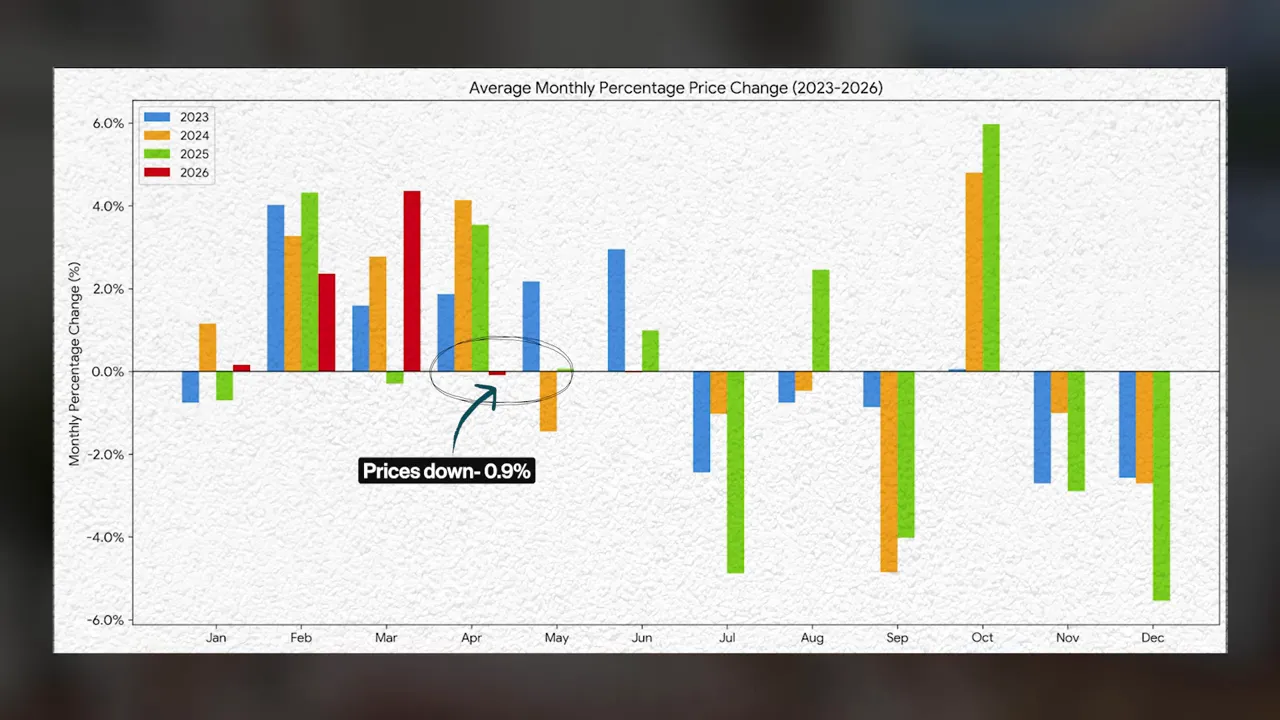
That is what I mean by atypical seasonality. Denver usually has a very recognizable rhythm. Spring gets competitive. Prices rise. Summer starts to cool a bit. But this year the normal spring surge has looked muted.
Now, I do not think this means the market is broken. I think it means Denver is still rebalancing from the absolutely wild COVID era boom.
Historically, average appreciation in the Denver area has been around 6% over the very long run. But during the pandemic era, things were nowhere near normal. From 2020 to 2021, Denver saw about a 24% jump. Then 2022 brought another major jump of roughly 19%.
When you stack those kinds of gains together, a stretch of flatter pricing afterward is not shocking. Honestly, from an affordability standpoint, it is healthier than another round of runaway appreciation.
So yes, prices are still expensive. But the market is not acting like a rocket ship right now. It is acting more like it is catching its breath.
Reason #2: Why Denver Housing Inventory Is Rising
The second reason is what I call the inventory paradox.
There are a lot of homes for sale. More than many people realize.
If someone says there is nothing available in Denver, that is usually not the full story. There is inventory. The real issue is whether the available inventory matches the budget, location, condition, and lifestyle that person wants.
In April 2026, active listings were around 12,768. That is slightly below April of the prior year, which was around 13,000. So year over year, inventory is a touch lower.
But zoom out historically and the picture changes. Denver has more properties for sale in April than it has had since roughly 2012.
Normally, if supply goes up that much, prices should weaken. Basic economics, right?
Except Denver prices are not really falling. They are flat.
So maybe demand is surging and soaking up the extra supply?
Nope. That is the next twist.
Pending sales, which are a good live read on how many buyers are actively making offers, are running lower. Closed sales show a similar pattern because most pending deals eventually make it to the closing table.
So here is the paradox:
- Inventory is relatively high
- Buyer demand is relatively soft
- Prices are not dropping much
What gives?
The best explanation is seller behavior.
A lot of sellers still want to move, but they are not willing to sell at a number that feels painful to them. They will list their homes. They may test the market. But if the offer that comes in is too aggressive on credits or too far below expectations, they would rather wait than cave.
That creates a very specific kind of market. Homes pile up on the market, but not every listing turns into a bargain. Some of those homes are simply sitting because the seller’s price expectation and the buyer’s payment reality do not line up yet.
That is why inventory can feel abundant and still not lead to dramatic price cuts across the board.
Reason #3: Why Some Denver Homes Sell Faster
The third reason is the days on market stats are incredibly misleading if you do not understand the difference between average and median.
For April, average days on market was about 40 days.
Median days on market was only about 14 days.
That is a huge gap.
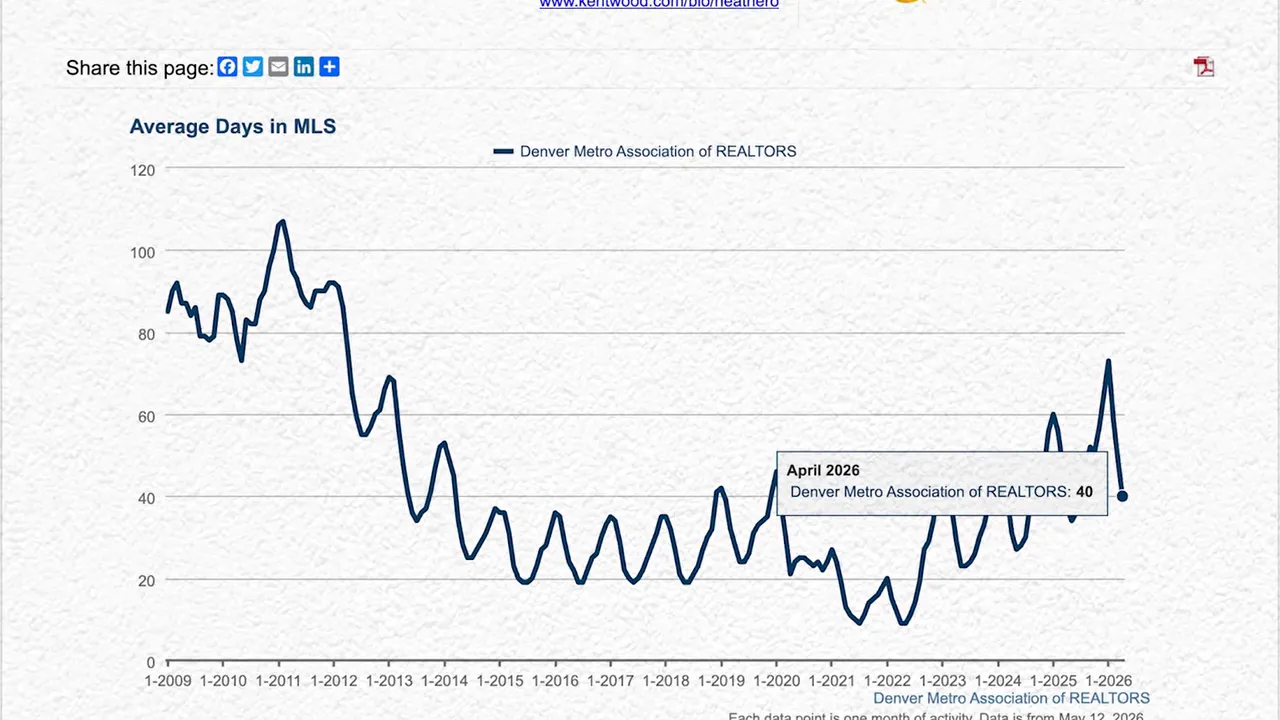
Median means half the homes sold in two weeks or less. So a lot of homes are still moving quickly.
But the average being so much higher tells you another group of homes is taking far longer, sometimes well beyond a month. Those slower listings pull the average up.
This is exactly why the market feels split in two.
When people see a property that has been sitting, they often assume something must be wrong with it. Sometimes that is true. Sometimes it has an issue with condition, location, layout, or pricing.
But sometimes there is nothing fundamentally wrong with the house. The seller may just be holding the line and refusing to take a lowball offer.
This is where neighborhood data matters a ton.
Median days on market varies dramatically by area. The central ring around Denver, especially the zones around the major highway loop, tends to move faster. As you move farther out, many areas become less competitive and listings can take longer to sell.
And even that broad pattern has exceptions. Every zip code has its own personality. A high end pocket behaves differently than an entry level suburb. A condo heavy area behaves differently than a detached home neighborhood.
So if you are trying to decide whether a home is stale for a good reason or simply waiting for the right buyer, you cannot just look at the listing age. You have to compare it to the immediate area and property type.
Reason #4: Smart Negotiation Strategies for Denver Buyers
The fourth reason is the gap between expectation and reality when it comes to pricing strategy, discounts, and affordability.
A lot of people hear stats like close-to-list price ratio and assume they know whether a buyer can negotiate. But that number can hide a lot.
If a house sells in the first week, the seller is usually getting very close to list price, sometimes over list price. Trying to come in low on day one is usually not the move.
But as a home sits longer, sellers typically become more flexible.
Still, you have to understand which list price you are talking about. The original list price matters more than the current list price if there have already been reductions along the way.
That is a big deal right now because about 36% of sellers are reducing their price, and the average reduction is around 5.7%.
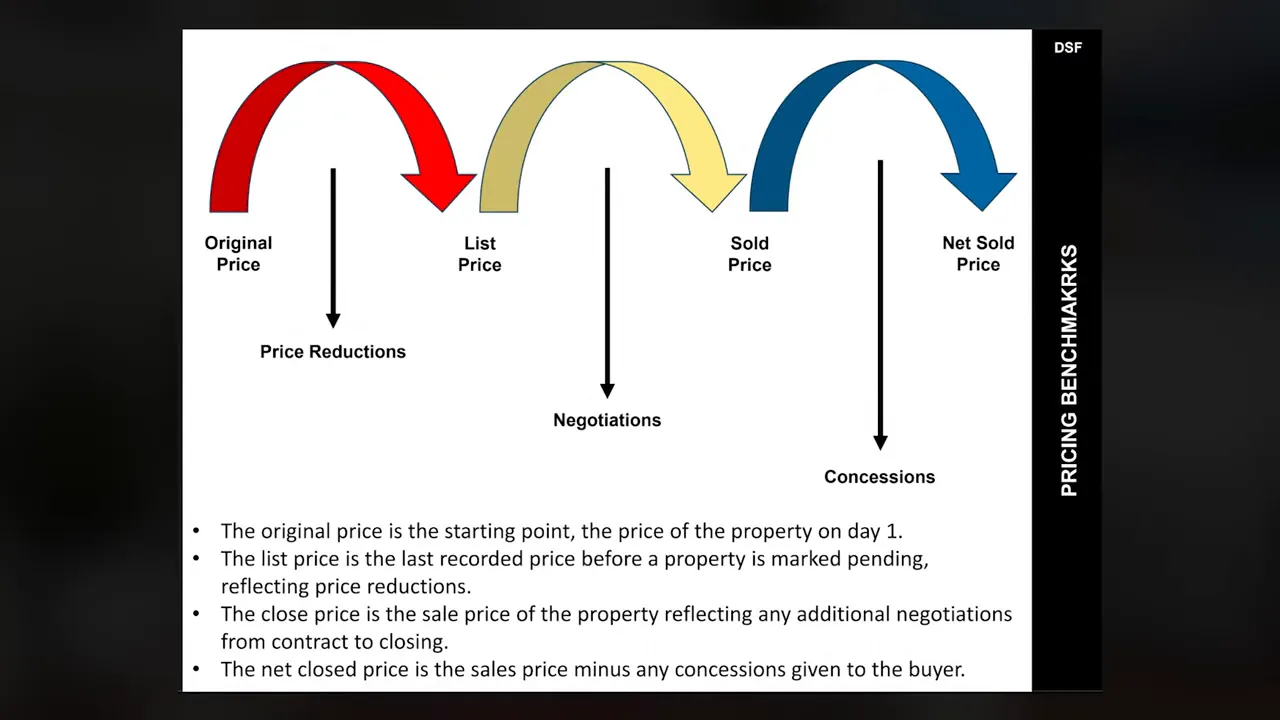
On a $600,000 home, a 5% price cut is about $30,000. That is not small. And if a buyer also asks for seller concessions on top of that, those concessions come out of the seller’s bottom line too.
That brings us to one of the smartest strategies in this kind of market.
If a seller has room to negotiate, asking for a straight price reduction is not always the best use of that money. Sometimes it is much more powerful to ask for seller concessions that buy down the interest rate.
Here is the example. On an $800,000 purchase with 10% down, a $25,000 price reduction might reduce the monthly payment by about $140.
But if that same $25,000 is used to permanently buy down the interest rate, the monthly savings can be closer to $400.
That is a huge difference for affordability.
From the seller’s perspective, the net effect may be similar. From the buyer’s perspective, the monthly payment can improve dramatically. In a market where affordability is one of the biggest pressure points, this is the kind of strategy that matters more than chasing a symbolic purchase price win.
So what should you expect in practice?
- If a home is brand new to market and priced well, expect competition
- If a home has lingered, there may be room to negotiate
- If there have already been price cuts, do not ignore the seller’s accumulated concessions
- If monthly payment matters most, consider rate buydown strategy instead of only focusing on price
That is the reality piece. This market is not uniformly soft. It is selective.
The best deals are usually not just about buying lower. They are about structuring smarter.
There are also a few things about Denver that are not especially strange right now, and that context helps too.
Location still drives everything. Some neighborhoods are still moving fast, others are more negotiable, and pricing has to be judged in the context of that specific pocket.
Detached homes still command a premium. More buyers want land, yards, and separation. That means condos, townhomes, and patio homes can be a more accessible path in if a detached house is out of reach.
Distressed sales are still very limited. There are not many foreclosures or short sales floating around. So if someone is waiting around for a giant wave of distressed inventory to create easy bargains, that really is not the setup here.
That means getting a deal in Denver usually comes down to knowledge, timing, and negotiation, not just hunting for obvious desperation.
FAQs About Denver Housing Market 2026
Are Denver home prices going down in 2026?
Not in a dramatic metro wide way. The bigger story is that prices are relatively flat. Compared with the last few years, Denver is seeing far less appreciation, and some spring pricing has been softer than expected, but broad values have not collapsed.
Why are some Denver homes selling immediately while others sit?
Because this is a split market. Well priced homes in strong locations can still move in days. Other homes sit because they are overpriced, less desirable for the area, or owned by sellers who are unwilling to accept aggressive offers.
Is Denver a buyer's market now?
In some segments, buyers have more leverage than they did during the frenzy years. Inventory is much higher historically and demand is softer. But it is not a universal buyer's market across every neighborhood and price point. Some homes still attract fast competition.
What does the inventory paradox mean?
It means Denver has a relatively high number of homes for sale at the same time buyer demand is softer, yet prices are not falling much. The reason appears to be that many sellers would rather wait than accept deep discounts.
What is more useful than looking at average days on market?
Look at both average and median days on market, then compare those figures to the specific neighborhood and property type. Average can be pulled up by stale listings, while median shows how quickly the middle of the market is actually moving.
Should buyers ask for a lower price or seller concessions?
That depends on your goal. If keeping the monthly payment lower matters most, seller concessions used for a permanent rate buydown may be more valuable than a straight price reduction. In the example discussed here, the same seller contribution produced much larger monthly savings through rate reduction.
Are condos and townhomes behaving the same as detached homes in Denver?
No. Attached properties and detached homes often move differently. Detached homes usually command stronger demand because land remains highly desirable. Attached homes can still be a smart option, especially when lower maintenance or HOA covered exterior costs help affordability.
Final Thoughts on the Denver Housing Market
So yes, something strange is happening in Denver’s housing market but it’s not random.
Prices are flat as the market rebalances, inventory is up, and sellers aren’t rushing to accept deep discounts. This is a selective market where success comes down to understanding the numbers, timing, and negotiation strategy.
While affordability remains a challenge, buyers who know where to look can still find great opportunities. If you're thinking about buying in the Denver area, call/text me at 720-606-4518 or book a FREE consultation here. to discuss your budget, timeline, and the best strategy for your target neighborhood.
READ MORE: Denver Colorado Real Estate: Why Condos Aren’t as Cheap as They Look