If you are moving to Denver Colorado, or even just thinking about buying or selling here, you need to know this market is doing two completely different things at once.
Some homes are sitting. They are getting price cuts, racking up 60 plus days on market, and leaving sellers frustrated. At the exact same time, another house a few streets over can go under contract in a week and sometimes even beat list price.
That sounds contradictory, but it is exactly what is happening.
The reason is simple. The Denver metro market is no longer one big, uniform market. It is a collection of micro markets. Price point matters. Condition matters. HOA matters. Location matters. And if you are moving to Denver Colorado, the type of home you choose matters just as much as the city itself.
This is especially important for people who are relocating and assuming the whole metro behaves the same way. It does not. Right now, buyer leverage has shifted in a lot of situations, but not all of them.
Table of Contents
- Denver Housing Market Overview
- Struggling Type #1: Homes with High HOA in Denver CO
- Struggling Type #2: Homes Needing Repairs in Denver CO
- Struggling Type #3: New Construction Areas in Denver CO
- Struggling Type #4: Overpriced Homes in Denver CO
- Struggling Type #5: Downtown Condos in Denver CO
- Denver Homes Selling Fast: Move-Up Homes in Denver CO
- Denver Homes Selling Fast: New Construction in Denver CO
- Denver Homes Selling Fast: Turnkey Homes in Denver CO
- Denver Homes Selling Fast: Ranch-Style Homes in Denver CO
- Moving to Denver Colorado: Key Buyer Takeaways
- FAQs About Moving to Denver Colorado
Denver Housing Market Overview
A lot of people lean on months of inventory to describe the market. Technically, the Denver metro area sits around three months of inventory, which normally sounds like a seller-friendly number. But that label is way too simplistic for what buyers and sellers are dealing with on the ground.
A better way to understand the market is to look at supply versus demand.
Supply is the number of active listings. Demand is the number of homes that have gone pending in the last 30 days.
Right now, active inventory in the Denver area is hovering around 14,000 homes. That is a little lower than the same month last year, but still dramatically higher than what people got used to during the low inventory years. Demand is holding around 4,700 pending sales per month, which is fairly steady compared to the last few years after rates rose, but still roughly 20 percent below the pre rate spike boom years.
That combination tells you a lot. There are plenty of homes for sale, but not enough buyers to absorb all of them equally. So yes, in many cases this feels more like a buyer-leaning market.
But that does not mean every buyer has unlimited negotiating power, and it definitely does not mean every seller is doomed.
Median days on market is still only around 15 days. That means half of the homes that do sell are selling in under two weeks. The average is much higher, around 38 days, because the other half are lingering and dragging the average upward.
That is the split personality of this market. If you are moving to Denver Colorado, you need to know which homes are getting snapped up and which ones are becoming stale.
EXPLORE HOMES FOR SALE IN DENVER COLORADO
Struggling Type #1: Homes with High HOA in Denver CO
High HOA homes are a tough sell right now.
Attached properties like condos, townhomes, patio homes, and even some single-family neighborhoods can come with HOA fees in the $400 to $600 per month range. That is a major payment hit in a market where affordability is already stretched.
From a seller standpoint, that monthly cost has to be accounted for somehow. Sometimes sellers offer to cover HOA fees for a year, but even that may not be enough if a buyer can negotiate a larger concession instead and use it however they want.
From a buyer standpoint, a high HOA raises questions:
- Are the reserves healthy?
- Is the budget being managed well?
- Could a special assessment be coming?
- What do the meeting minutes reveal?
- Do the rules make sense for the lifestyle you want?
- Are the amenities actually worth the monthly cost?
If the fees are high and the value is unclear, buyers hesitate. That usually means the price has to come down.
Struggling Type #2: Homes Needing Repairs in Denver CO
Not every older or outdated home is a problem. Buyers can often look past old carpet, dated paint, or cosmetic finishes.
The homes that struggle are the ones that feel neglected.
These houses often get showings because the price or photos create interest at first. But once buyers walk through and notice deferred maintenance, the tone changes fast.
Things like these can kill momentum:
- An aging water heater
- Worn out landscaping
- A deck that needs paint or repair
- HVAC systems at the end of their life
- General signs that maintenance has been postponed for years
A lot of sellers want to say they are selling “as is.” In this market, that mindset usually does not hold up. You can try to sell that way, but the market will respond by discounting the home or ignoring it.
The important thing to understand is this: making needed repairs protects value, but it does not automatically create a premium. Replacing a furnace or AC system may be necessary to compete, but buyers are not usually going to pay extra just because the house has the systems it should have had in the first place.
Struggling Type #3: New Construction Areas in Denver CO
This one catches people off guard.
There is nothing wrong with newer growth areas. In fact, a lot of them are appealing. But if you own a resale home in a community that is still actively being built, you are competing with builders, and builders have tools that most individual sellers do not.
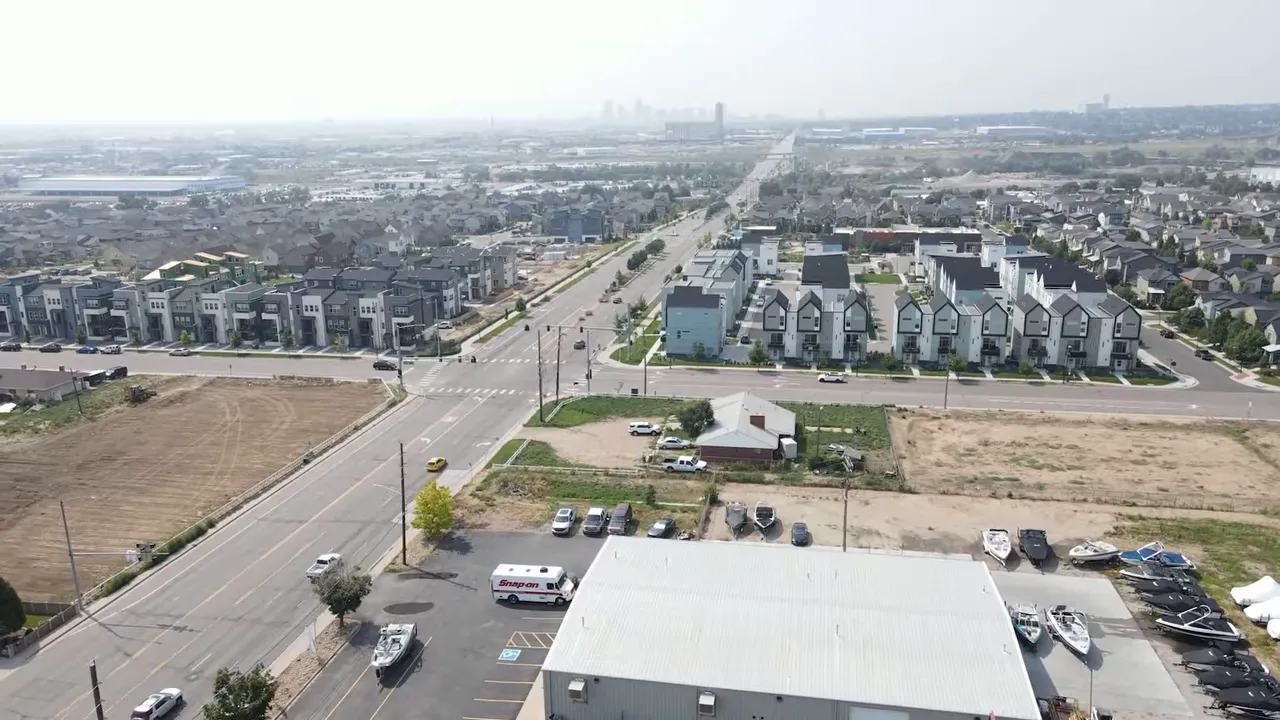
Think areas like Sterling Ranch, Castle Rock, Parker, Aurora Highlands, Broomfield, Superior, Longmont, and Lafayette. Denver’s geography funnels a lot of growth east, north, and south because the foothills limit westward expansion.
The challenge is that builders often offer aggressive incentives. They may not slash the sticker price, but they will buy down an interest rate, cover closing costs, or package upgrades in a way that makes the monthly payment much more attractive.
If you bought in one of those communities a year or two ago and now need to sell, you may discover that the builder next door is your biggest competition.
For buyers moving to Denver Colorado, this creates opportunity. You should absolutely compare the brand new inventory with resale homes in the same neighborhood, because the resale may offer a better overall deal.
Struggling Type #4: Overpriced Homes in Denver CO
Some homes are not struggling because of the neighborhood or the condition. They are struggling because they missed on pricing, presentation, or both.
Overpricing is not always obvious at first glance. A million dollar home in Littleton behaves differently than an entry level condo in the same area. You have to measure each property against the right competition.
A few useful clues:
- If days on market are well above the local median, the home may be overpriced.
- If the seller has already made a big price cut, they likely started too high.
- If the list-to-sale price pattern in that area suggests buyers are negotiating down, the original price may have been ambitious.
One example from the market was a home that started at $500,000 and later dropped to $460,000. That is already a significant reduction, and if it also sat for a long time, the market was clearly pushing back.
On the flip side, when a home is priced properly and gets strong showing activity right away, that is usually the market confirming the strategy.
Then there is marketing. If a listing has dark phone photos and the house looks dull, buyers will skip it. In a market with this much inventory, mediocre marketing costs real money.
Struggling Type #5: Downtown Condos in Denver CO
Condos in general are taking longer to sell, and the downtown condo market has had an especially hard time.
Work from home changed what a lot of people value. If you no longer need to commute into the urban core every day, the premium for living downtown can weaken. People have more flexibility, and many are choosing neighborhoods with more space or easier access to the lifestyle they want.
That has left many downtown condos trading at discounts compared to what owners expected a few years ago.
Denver Homes Selling Fast: Move-Up Homes in Denver CO
Now for the other side of the story. Some homes are moving fast.
One of the hottest categories is move up homes in places like Highlands Ranch, Littleton, Lakewood, and Arvada, especially in roughly the $500,000 to $800,000 range when they are priced correctly.
These west side and southwest suburbs tend to perform better because people moved here for the Colorado lifestyle. Proximity to the foothills, trails, and mountain access matters. A lot.
You can often see it visually on a map of listings. There may be more inventory east of I-25, but many homes on the west side of the metro move more quickly and hold pricing better because buyers value that location enough to pay for it.

Denver Homes Selling Fast: New Construction in Denver CO
There is a big difference between a resale home in a sprawling construction zone and a small new build pocket inside an already desirable area.
Smaller new construction projects in highly sought after locations are doing very well. Think prime pockets in places like Ken Caryl Valley, Highlands Ranch, RidgeGate, Arvada, Wheat Ridge, and Westminster.
Why are they hot?
- They are in strong locations
- They offer fresh, modern layouts
- They are move-in ready
- They often come with builder incentives
That combination is very hard for the market to resist.
Denver Homes Selling Fast: Turnkey Homes in Denver CO
If a home feels polished, modern, and truly move-in ready, it is going fast almost anywhere.
Buyers are responding to homes with designer level finishes and clean execution:
- Custom tile
- Updated fixtures
- Modern cabinet hardware
- Stainless appliances
- Quartz counters
- Hardwood or durable luxury flooring on the main level
The reason is not complicated. Many buyers do not have extra cash after closing, and even if they do, they do not necessarily want the hassle of remodeling. Affordability fatigue is real. So turnkey wins.
Denver Homes Selling Fast: Ranch-Style Homes in Denver CO
Another very strong niche is ranch style living, especially for downsizers.
single-family ranch homes and patio homes with the primary bedroom and laundry on the main floor are especially desirable. These are the kinds of homes that work well not just for today, but for the future too.
That matters to buyers who are thinking long term and want comfort without a staircase heavy layout.
Patio homes often fit this need well because they provide the right floor plan without the burden of a huge yard. For many downsizers, that is a feature, not a compromise.
Moving to Denver Colorado: Key Buyer Takeaways
If you are moving to Denver Colorado, the biggest mistake you can make is assuming every listing deserves the same strategy.
Some homes are begging for negotiation. Others are priced correctly and can still draw quick offers. Some neighborhoods are absorbing inventory well. Others are oversupplied. Some property types are getting punished for affordability issues. Others are commanding a premium because they match exactly what buyers want right now.
So if you are moving to Denver Colorado, here is the practical takeaway:
- Look at micro markets, not headlines. Neighborhood, price point, and property type all matter.
- Do not assume a stale listing is a bargain. It may be sitting for a very good reason.
- Compare resale against new construction carefully. Builder incentives can shift the math fast.
- Prioritize condition if affordability is tight. A cheaper house that needs major work can become the more expensive choice.
- Expect stronger competition for west side lifestyle locations and turnkey homes.
Denver is still a lifestyle driven market. Location remains the first filter, but quality and ease matter more than ever because buyers do not want to pour cash into a property right after closing.
That is why moving to Denver Colorado today requires a little more strategy than it did in the frenzy years. The good news is there are opportunities on both sides. Buyers have more choices. Sellers can still succeed. But both need to understand which lane they are in.

EXPLORE HOMES FOR SALE IN DENVER COLORADO
FAQs About Moving to Denver Colorado
Is moving to Denver Colorado a good idea in this market?
It can be a very good time for moving to Denver Colorado because inventory is much higher than it was during the ultra competitive years. That gives buyers more choices and more room to negotiate on the right properties. The key is knowing which homes are actually overpriced or struggling versus which ones are still competitive.
Are Denver home prices falling across the board?
No. Some homes are getting price cuts and sitting for weeks, while others are selling fast. The market is split by location, condition, HOA burden, and property type.
Which Denver area suburbs are strongest right now?
Move up homes in Highlands Ranch, Littleton, Lakewood, and Arvada are performing especially well when priced properly. These areas benefit from strong lifestyle appeal and better access to the west-side amenities many buyers want.
What types of homes should buyers be careful with?
Be cautious with high HOA properties, homes with deferred maintenance, resales in active new build zones, overpriced listings, and many downtown condos. Those categories often need extra analysis before making an offer.
What kinds of homes are selling quickly in Denver?
Well priced move up homes, prime location new builds, fully updated turnkey properties, and ranch style homes geared toward downsizers are all strong performers right now.
If you’re ready to shop with confidence—or you want to know exactly which Denver micro-markets are negotiating and which are competing—reach out to me anytime. Call/Text 720-606-4518 or book a FREE consultation here.
I’ll help you compare the right neighborhoods and property types so you don’t waste time on listings that look tempting but aren’t actually the best deal right now.
READ MORE: Moving to Denver Colorado: Best Areas to Live (Neighborhood & Suburb Guide)