The Denver Colorado housing market is not behaving like a traditional crash story. It is stalling, splitting into very different pockets, and becoming harder to afford in ways that do not always show up in a listing price.
That is the problem. People tend to focus on purchase price and interest rate, but the actual monthly cost of owning a home is being pushed higher from several directions at once. In the Denver Colorado housing market, homeowners are locked into low-rate loans, property taxes are rising, insurance costs are climbing, newer communities can carry major metro district taxes, and older homes increasingly need expensive work.
A crash is obvious. Prices fall, the headlines get loud, and everyone understands something changed. This is more frustrating because it is a slow squeeze. A home may look attainable until the full payment, taxes, insurance, HOA costs, and repair needs come into focus.
Key Takeaways
- Low existing mortgage rates are keeping many owners from selling, contributing to a stalled rather than crashing market.
- Property tax increases, higher insurance premiums, metro district taxes, and HOA fees can substantially change a home's real monthly cost.
- Older homes need careful inspections because repair costs and deferred maintenance are creating a sharp divide between renovated and neglected properties.
- Buyers and sellers both need to focus on total ownership cost, accurate pricing, and thoughtful concessions.
Table of Contents
- Denver Colorado Housing Market: Why It Feels Stalled
- Mortgage Rate Lock-In in Denver
- Denver Property Tax Reassessment
- Home Insurance Costs in Denver
- Metro Districts and HOAs in Denver
- Aging Homes and Repairs in Denver
- How to Navigate the Denver Housing Market
Denver Colorado Housing Market: Why It Feels Stalled
The current Denver Colorado housing market is complicated because supply and affordability are moving in different directions. Inventory was down 6 percent year over year in the July data, yet there were roughly 13,000 active listings. That is not a tiny amount of inventory. In fact, it represents more homes for sale than Denver has had during a summer selling season in the past 13 years.
So why does it still feel so hard? Sellers are often not willing to accept the price reductions needed to create a deal because selling means giving up a low mortgage rate. Buyers, meanwhile, are doing their own math and finding that carrying costs can blow up a budget even when the home price looks reasonable.
This creates a stale market rather than a clean reset. Some well-prepared homes move. Some aggressively priced homes move. But homes with unrealistic pricing, high expenses, or neglected maintenance can sit, and sit, and sit.
Mortgage Rate Lock-In in Denver
The first force shaping the Denver Colorado housing market is the rate lock-in freeze. Homeowners who bought or refinanced at much lower rates are effectively attached to their existing mortgages. They may want more space, a different school area, a shorter commute, or a move closer to family, but replacing their current loan with a higher-rate purchase loan can make the payment unaffordable.
Usually, rising prices encourage more owners to list. This time, that natural response is weakened. The data point that matters here is that only 21 percent of outstanding mortgages carry rates above 6 percent. That is a relatively small share, meaning many owners are paying far less than current borrowing costs.
That low-rate advantage limits the normal flow of move-up sellers and downsizing sellers. But it does not automatically create a red-hot bidding war. The Denver Colorado housing market currently has enough active choices that buyers can compare homes, scrutinize costs, and negotiate.
What buyers and sellers can do
- Buyers: Make smart, property-specific offers and understand which concessions could meaningfully improve the payment.
- Sellers: Position the property to help solve the buyer's affordability problem, including incentives similar to builder rate buydowns with points.
- Everyone: Stop treating the list price as the whole deal. The carrying cost is the deal.
Denver Property Tax Reassessment
The next affordability hit in the Denver Colorado housing market is property tax. A fixed-rate mortgage does not mean a fixed monthly housing payment. Tax bills can move, and those changes can be large enough to affect both purchasing power and buyer confidence.
Colorado homeowners are seeing property tax increases ranging from 20 percent to more than 40 percent on bills paid in 2026. The key issue is that lawmakers had temporarily lowered assessment rates and reduced the amount of home value subject to taxation. For the 2025 property tax year, paid in 2026, the residential assessment rate is 7 percent for schools and 6.25 percent for other local governments. The temporary $55,000 valuation reduction has ended.
That means a tax bill can rise even if a home's market value is flat or slightly lower, depending on local mill levies. One Denver calculation showed that a $500,000 home could see annual taxes rise from about $2,360 to about $2,680 without an increase in value.
In the Denver Colorado housing market, a difference of $100 or $200 per month is not a minor detail. It can change what a buyer qualifies for, whether they feel comfortable proceeding, or whether the home that seemed perfect suddenly feels like too much.
Buyers should review tax certificates as part of the due diligence process. Sellers need to recognize that taxes are another affordability factor being weighed against their home. Accurate pricing and helpful incentives matter even more when a buyer's payment is already stretched.
Home Insurance Costs in Denver
When people think about Colorado insurance costs, they often think only about wildfires. That can absolutely matter in wooded mountain areas, but throughout the Denver Colorado housing market, hail is a massive driver of homeowner insurance premiums.
Roof damage from hail accounts for roughly half of homeowners insurance premiums in some counties, making it Colorado's largest catastrophe-related insurance cost. According to Insurify figures referenced here, the average Colorado homeowners insurance premium reached around $4,000 at the end of 2025 and was projected to reach about $4,200 by the end of 2026.
Colorado ranks as the sixth most expensive state for homeowners insurance, and LendingTree found that the state had the largest homeowners insurance rate increase in the country in 2025, with rates climbing 18 percent in one year.
This is one of the easiest things to underestimate when moving into the Denver Colorado housing market. Insurance is not a tidy, predictable line item. The difference between one property and another can be hundreds of dollars per month. As soon as a specific house becomes a serious possibility, get a real insurance quote. Do not assume that a generic estimate tells you enough.
Metro Districts and HOAs in Denver
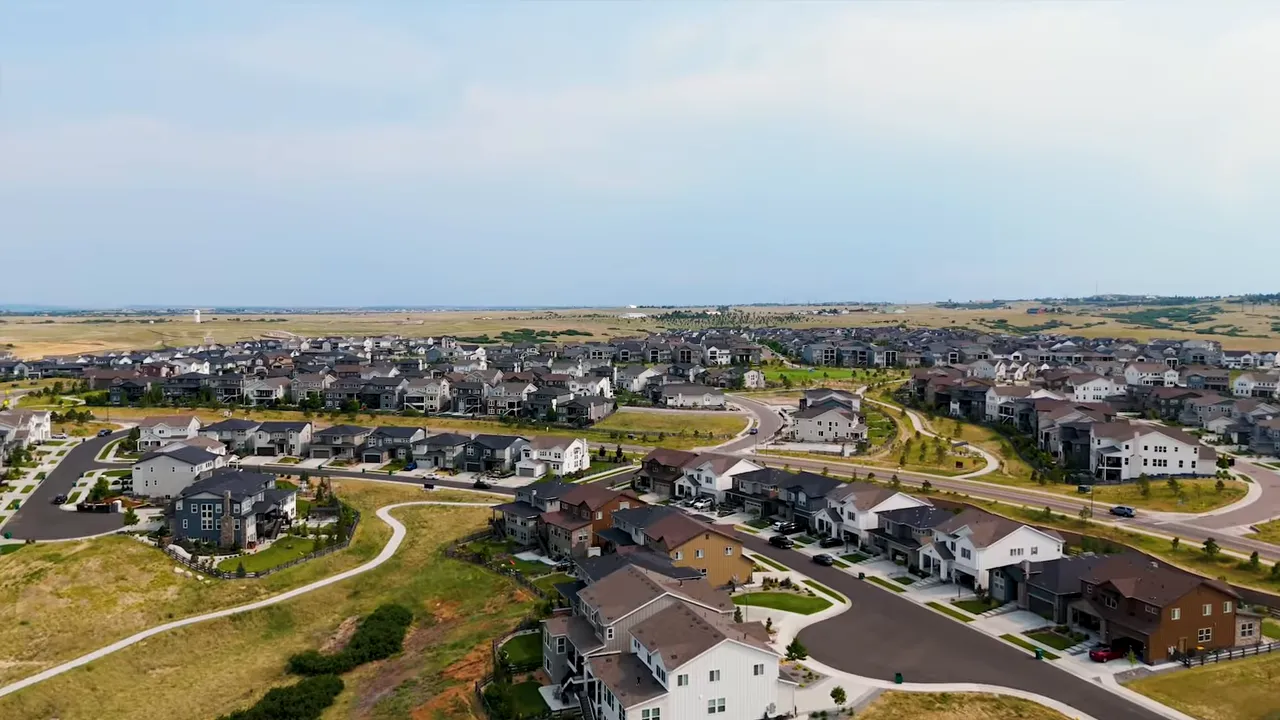
A house can look affordable online while hiding thousands of dollars a year in additional costs. This is especially important for relocation buyers exploring the Denver Colorado housing market, where metro districts and HOA fees can vary wildly from one community to another.
Metro districts are common in newer communities. They use higher taxes to fund infrastructure such as roads, parks, and schools as the area is built out. The tradeoff can be worthwhile, but it needs to be part of the payment conversation from day one.
Sterling Ranch is a clear local example. Average taxes on an average-priced home in Littleton may run around $3,000 to $4,000 a year. Metro taxes in Sterling Ranch can be closer to $10,000 a year. That can add roughly $500 per month to the house payment simply for choosing the newer area.
New construction communities can still offer opportunity. Buying early and waiting for a community to mature can be a way to benefit from new-build appreciation. Just do not buy based on a shiny model home and a base price alone. Account for the entire cost of living there.
HOAs are not automatically bad
HOAs get a lot of hate, and sometimes that is deserved. But an HOA is not automatically a deal breaker in the Denver Colorado housing market. It is about what you receive, what you value, and what your life actually looks like.
For example, a couple moving from a single-family home to an attached property may be surprised by a $500 monthly HOA fee. Then they may realize that fee helps offset insurance costs and pays for exterior or landscape responsibilities they no longer want to manage.
If mowing a large lawn every weekend sounds wonderful, a larger lot may be exactly right. If hiking and biking in the mountains sound better than yard work, a smaller yard or an HOA that handles maintenance may actually be a great fit. The point is to compare the lifestyle and the total expense, not react to one fee in isolation.
Aging Homes and Repairs in Denver
The final pressure point in the Denver Colorado housing market is the aging housing stock. Many central Denver homes were built from the 1950s through the 1980s, and major systems are reaching the stage where they fail. Roofs, furnaces, air conditioning, and electrical panels are expensive. Foundation movement from expansive clay soils can make things even more serious.
Replacing a roof, furnace, AC system, or electrical panel can now run roughly $10,000 to $25,000. Work that might have cost around $5,000 not long ago can now be dramatically more expensive. That creates a real challenge for sellers preparing a home and for first-time buyers who used most of their cash to get through closing.
Deferred maintenance does not disappear. It piles up. When inspection reveals old systems, ignored repairs, or foundation concerns, buyers either walk away or ask for major price reductions. That is helping create an intense neighborhood split in the Denver Colorado housing market.
A renovated 1960s brick ranch can sell quickly for top dollar. An unmaintained home two streets away can sit for months. That is not just a cosmetic difference. Buyers are pricing in the cost, stress, and uncertainty of bringing an older home up to standard.
Smart moves for older homes
- Buyers should not be afraid of an older home, but should use the inspection process to negotiate thoughtfully for repairs and risks.
- Sellers should address the work that will obviously become an inspection issue before going live whenever possible.
- Sellers also need an agent with dependable contractor relationships and a practical plan for coordinating repairs.
In one recent sale, six contractor line items were handled at closing after six months of preparation and updates. That kind of coordination is not typical, but it shows why experience matters. This is usually the biggest financial transaction of your life. A part-time friend of a friend is not a strategy.
How to Navigate the Denver Housing Market
The Denver Colorado housing market is still full of good opportunities, but the strategy has changed. The right home is not the one with the prettiest photos or the lowest list price. It is the one whose total cost, condition, location, and lifestyle fit your actual plan.
Before making an offer, build a complete monthly budget that includes principal and interest, current property taxes, insurance quotes, HOA dues, metro district taxes, likely utilities, and realistic maintenance. For older homes, keep repair capacity in the plan. For newer communities, understand exactly what the metro district is funding and how it affects your payment.
For sellers, the message is equally clear: price accurately, prepare carefully, and be willing to solve a buyer's affordability concern. Incentives, rate buydowns, repair work, and clean documentation can matter more than trying to hold out for a number that no longer matches the full reality of the property.
This is not a simple market. But clear numbers, strong due diligence, and a strategy built around total ownership costs can make the Denver Colorado housing market far more manageable.

FAQs About The Denver Colorado Housing Market
Is the Denver Colorado housing market crashing?
No. The market is described as stalling rather than crashing. Homes are available, but affordability pressures and low-rate lock-in are making transactions more complicated.
Why are homeowners reluctant to sell right now?
Many owners have mortgage rates that are much lower than current rates. Selling and buying another home can mean exchanging a manageable payment for a much higher one.
What costs should buyers check besides the mortgage payment?
Buyers should evaluate property taxes, an actual homeowners insurance quote, HOA dues, metro district taxes where applicable, and likely repair or maintenance costs.
Are metro districts always a bad investment?
No. Metro districts can fund the roads, parks, schools, and infrastructure of newer communities. The important thing is to understand the tax burden and make sure the full payment works for your budget.
Thinking about buying a home in the Denver Colorado housing market? Let’s look beyond the list price and help you understand the true cost of ownership, from property taxes and insurance to HOA fees, metro district taxes, and potential repairs. Call/text me at 720-606-4518 or book a FREE consultation here to discuss your options and create a buying strategy that fits your budget.
READ MORE: Denver Developments That Could Transform Living in Colorado